
🎉 Get 40% off Pre-Book Now →
Silhouette Photography for Beginners

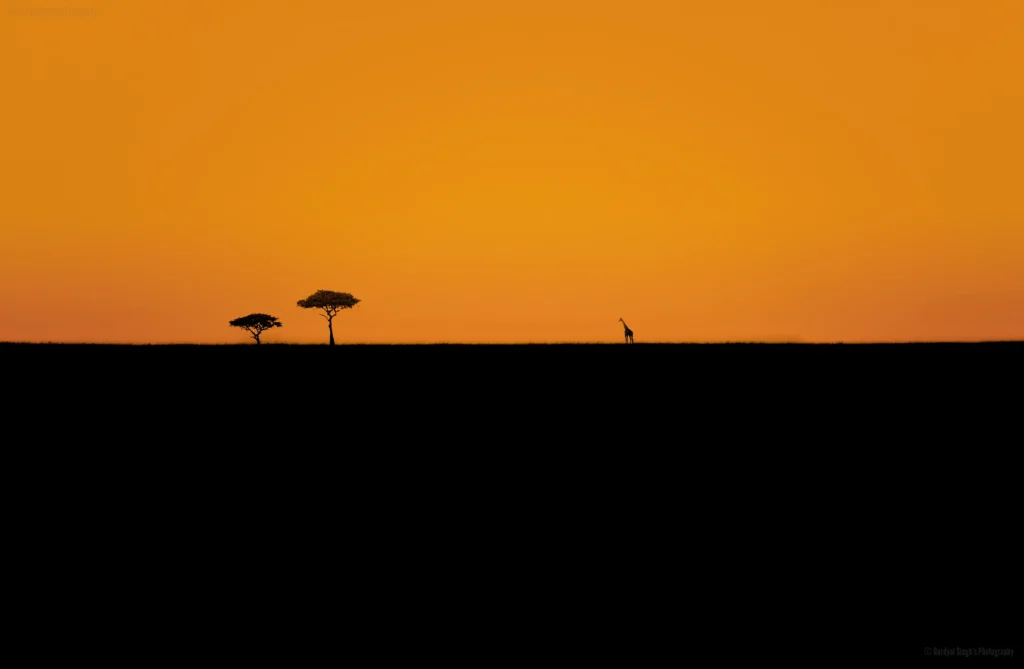
Silhouette photos of animals are one of the most striking parts of African wildlife photography. A trip to the savannah feels incomplete without at least one good silhouette shot.
Composition
Silhouette photos are usually taken in low light. Because of this, you do not need to worry about capturing small details in the subject. Instead, focus on how you compose the frame.
Place the sun behind your subject or at a slight angle, depending on the look you want. Think about what you want to include in the frame and what to leave out. For example, including an acacia tree gives a strong connection to the African savannah.

Use Manual Mode
Switch your camera to Manual Mode so you can control the aperture, shutter speed, ISO, and white balance yourself.
Do not use Auto, Aperture Priority, Shutter Priority, or any other automatic modes. These can interfere with getting a proper silhouette.
Camera Settings
If you are reading this, you likely already have a DSLR or mirrorless camera. That is ideal for this type of photography. Phones and tablets usually cannot handle silhouettes well in low light.
White Balance and Color Temperature
The warm orange glow often seen in silhouette photos comes from shooting at sunrise or sunset and adjusting your camera’s white balance.
Go to your camera’s white balance menu and look for the Kelvin or Color Temperature option. Increase it to the warmer end of the range, around 8000 to 12000K.

ISO
Low light can create noise in your photos. Because silhouettes do not rely on fine detail, you can keep your ISO low to reduce noise. Try settings between 100 and 400.
Aperture
Silhouettes are mostly flat images with little depth. To keep the whole scene in focus, set your aperture between f/8 and f/11.
Shutter Speed
To avoid motion blur, especially when animals are moving, use a faster shutter speed. A setting between 1/1000 and 1/2000 usually works well.

Trust Your Eyes
These settings are a starting point. Adjust them based on the light and your results. Sometimes you may need to wait for the right light.
If you do not get the warm orange tone you want, try shooting at dawn or dusk, just before or after the sun appears on the horizon. That is when silhouettes look their best.